| Feature | SSDI (Social Security Disability Insurance) | SSI (Supplemental Security Income) |
|---|---|---|
| Based On | Your work history and payroll tax contributions | Financial need / limited income and resources |
| Funding | Social Security trust funds | General tax revenues |
| Who Qualifies | Workers who earned enough work credits | Disabled individuals with low income, regardless of work history |
| Benefit Amount | Based on average lifetime earnings | Fixed federal rate (with possible state supplements) |
| Health Insurance | Medicare after 24 months | Medicaid in most states |
| Age Requirement | Under full retirement age | Any age (including children with disabilities) |
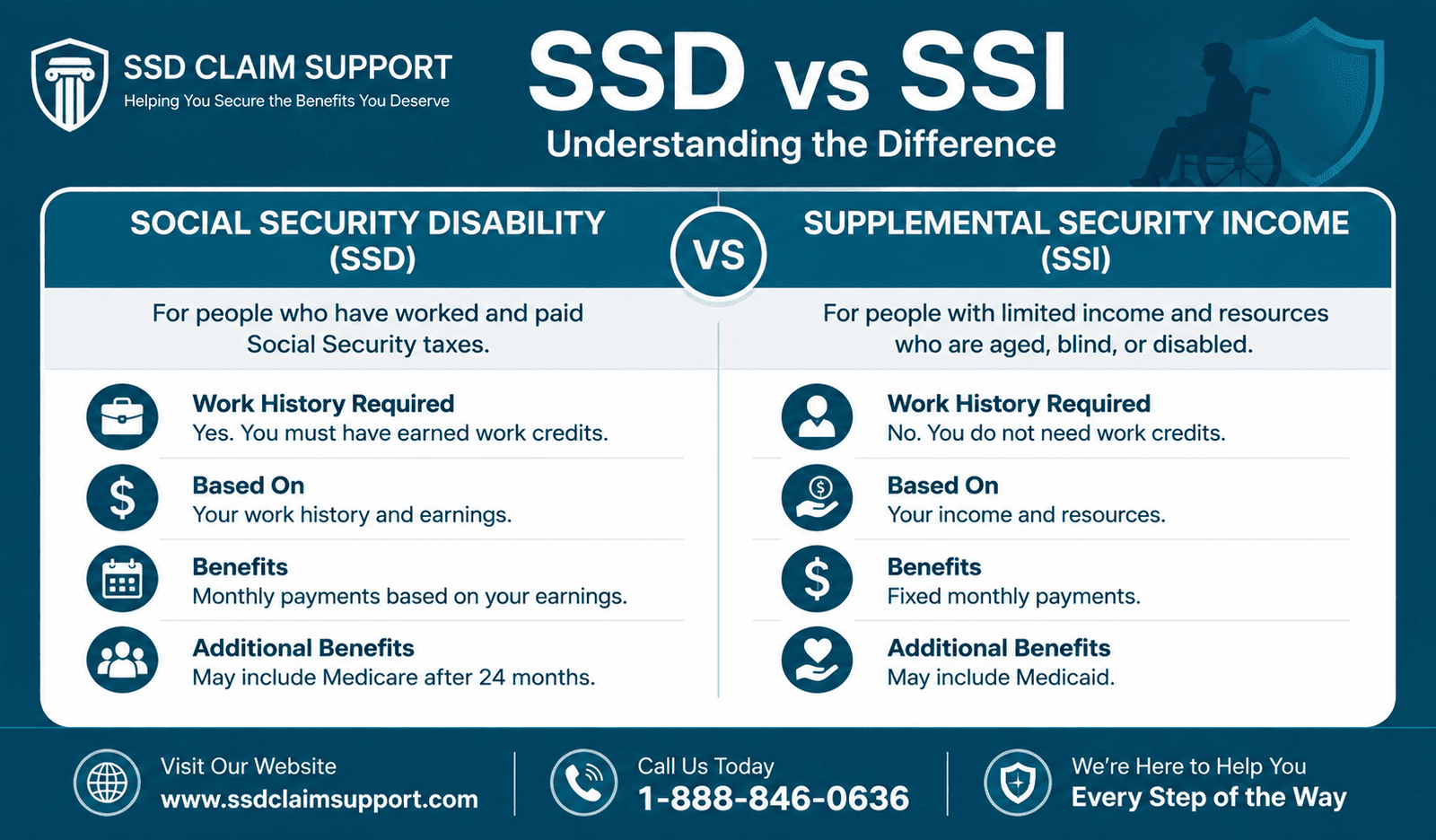
SSDI is an insurance program. You earn eligibility by working and paying Social Security taxes, accumulating “work credits.” Your monthly benefit is based on your earnings history, and after 24 months of disability you become eligible for Medicare.
SSI is a needs-based program. It provides a modest monthly payment to disabled adults and children who have limited income and resources, regardless of their work history. It typically comes with Medicaid coverage.
Many claimants qualify for both programs at the same time — known as “concurrent” benefits. An experienced advocate can help you maximize every benefit you are entitled to.
Whether you apply for SSD, SSI, or both, the SSA applies the same strict medical definition of disability.
You must be unable to do substantial gainful work due to a medically determinable impairment lasting 12+ months.
The SSA accepts one application for both programs and determines which one(s) you qualify for automatically.
Both programs share the same 4-level appeal process: reconsideration, hearing, appeals council, and federal court.